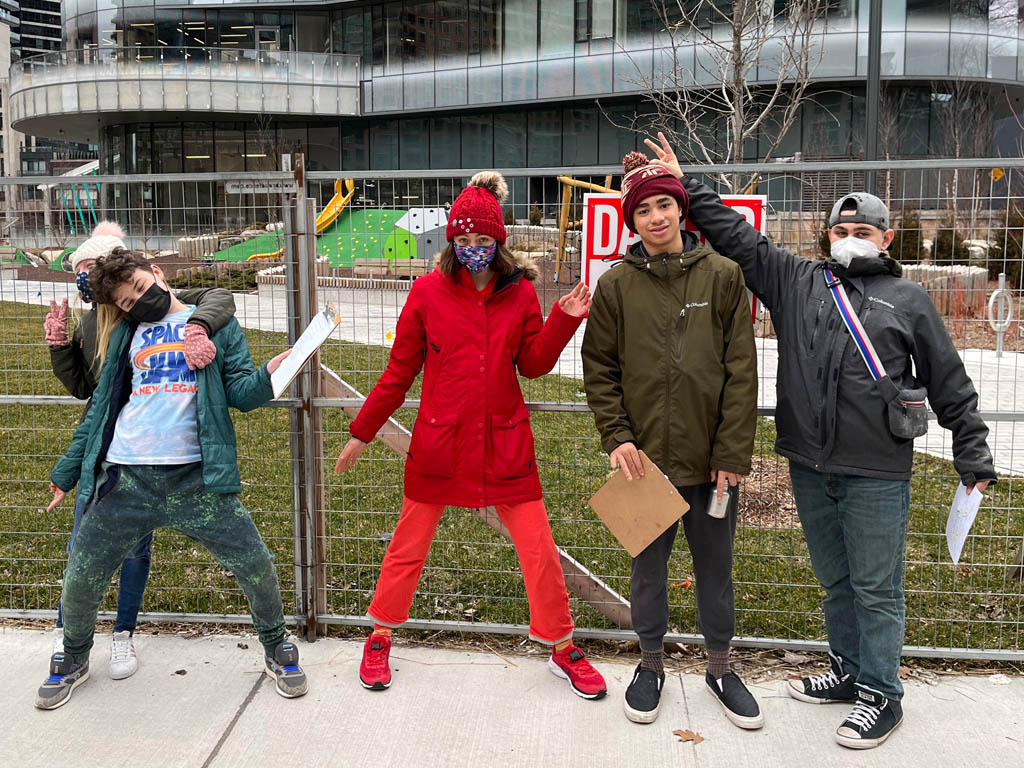
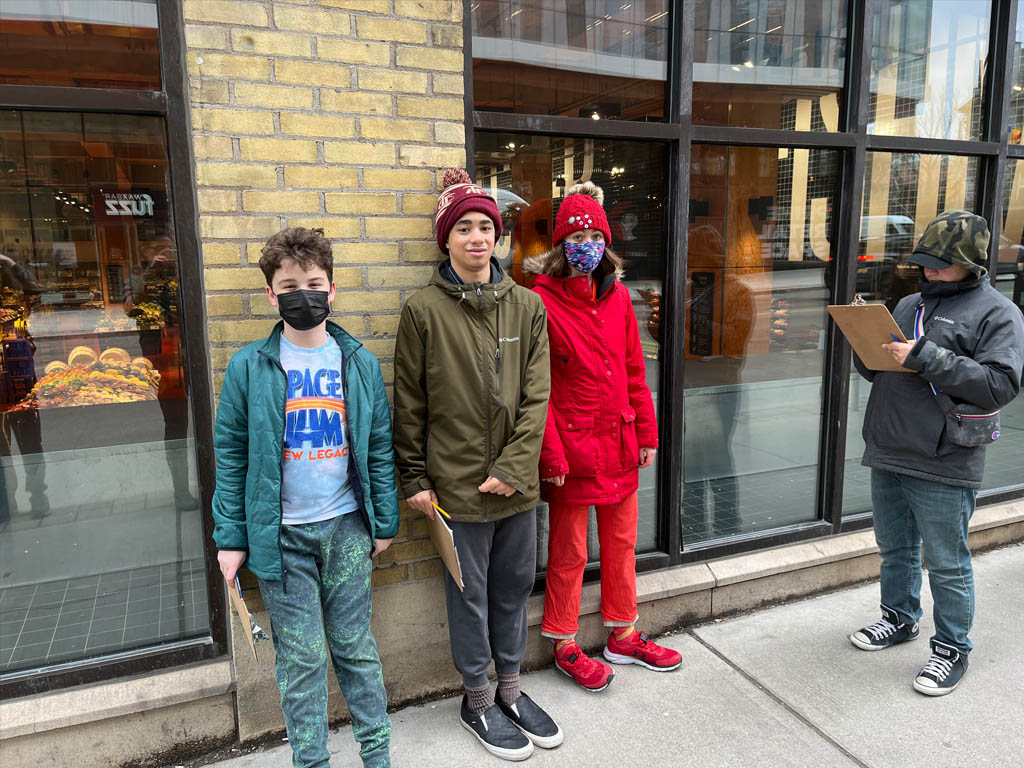
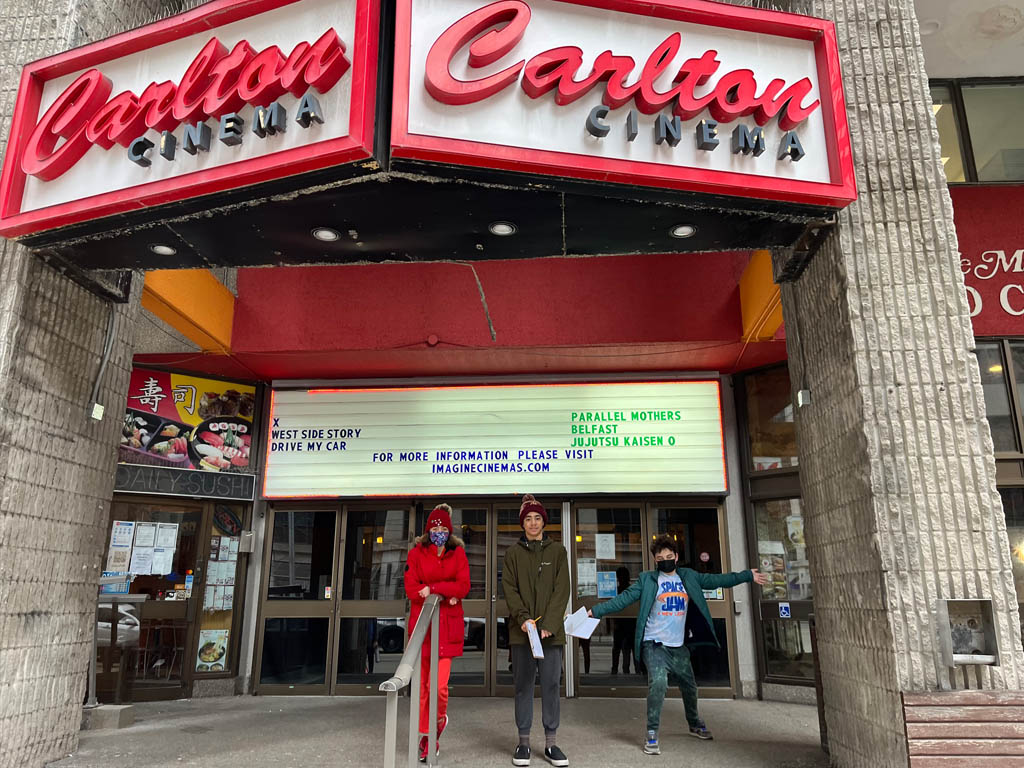
Alex’s Exploring Technology has been learning about the design process and how it can be applied to urban planning. We began with research and brainstorming to explore what makes a neighbourhood a good place to live. Students generated lists of “look-fors,” and we furthered our research by heading out on a walk.
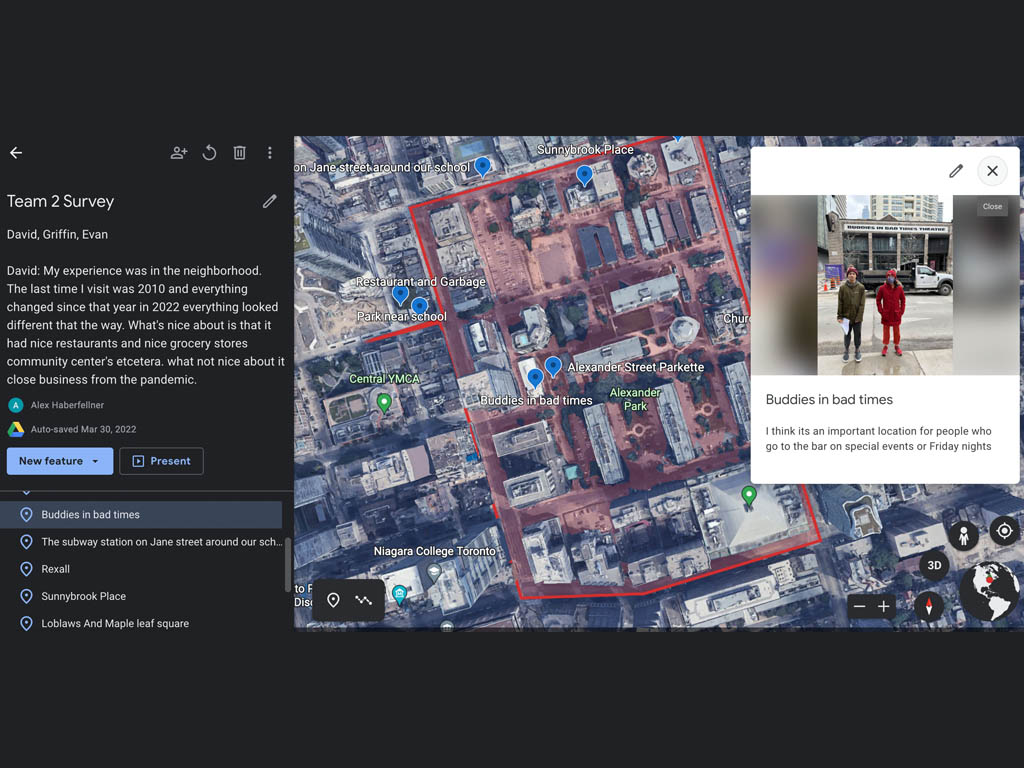
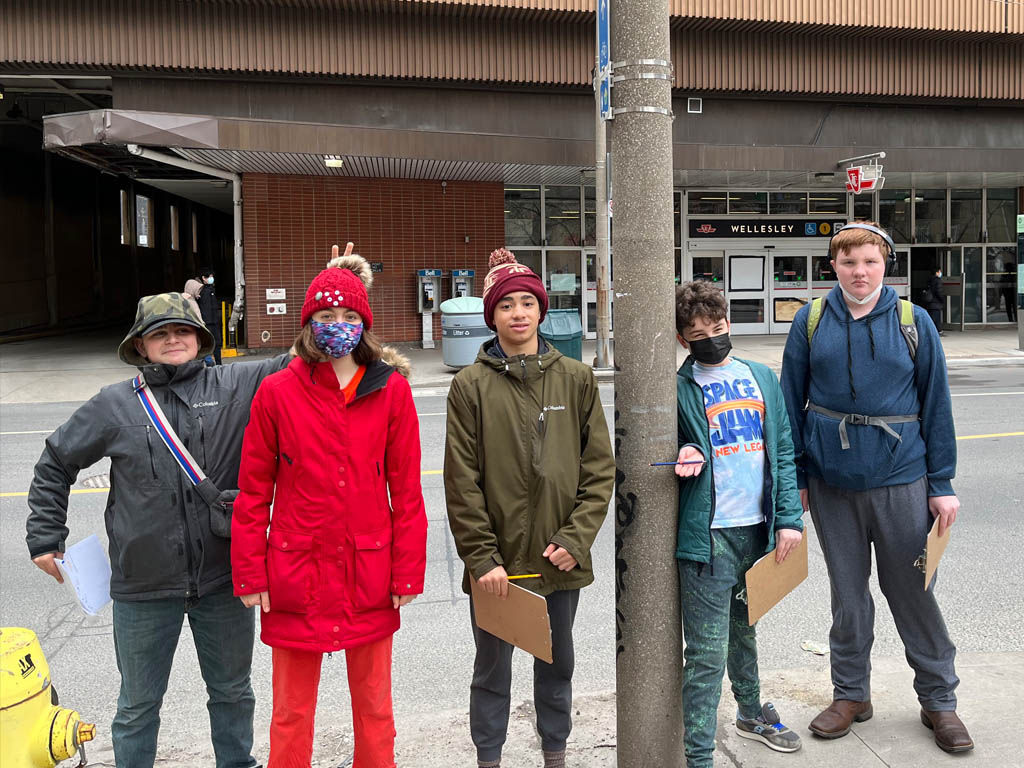
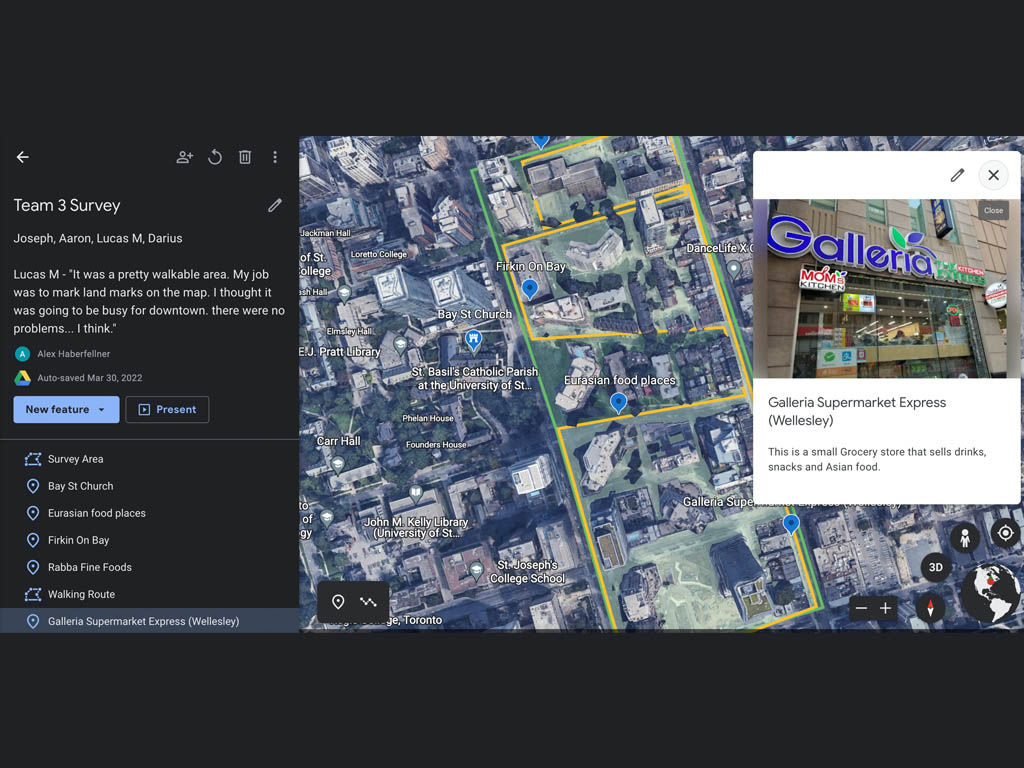
During the walk students worked in survey teams to notice aspects of the neighbourhood that make it a good place to live, and aspects that need improvement. Teams took photos as evidence, and marked important findings on a map. Back at school, they worked to record their findings on google earth.
One new insight gained during the walk was the importance of art and cultural spaces (murals, theatres etc.) in a neighbourhood.
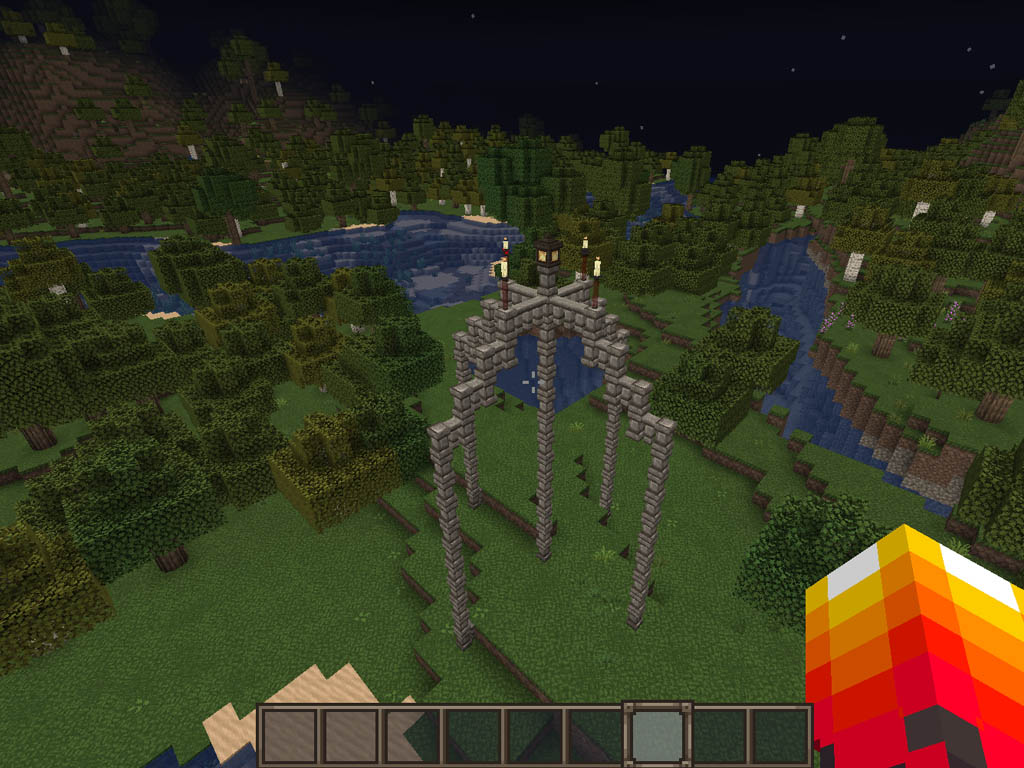
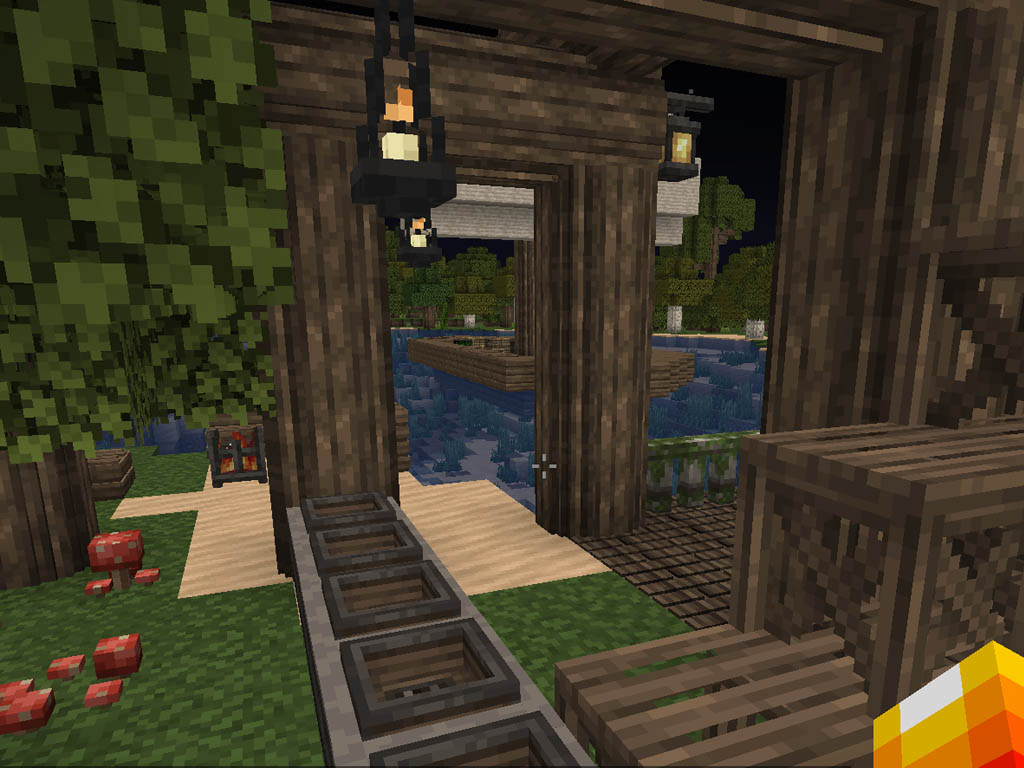
Based on their explorations, students worked on designing their own prototype neighbourhoods. Some students used Minecraft to create neighbourhood layouts. Others worked on creating a physical model of an ideal neighbourhood.
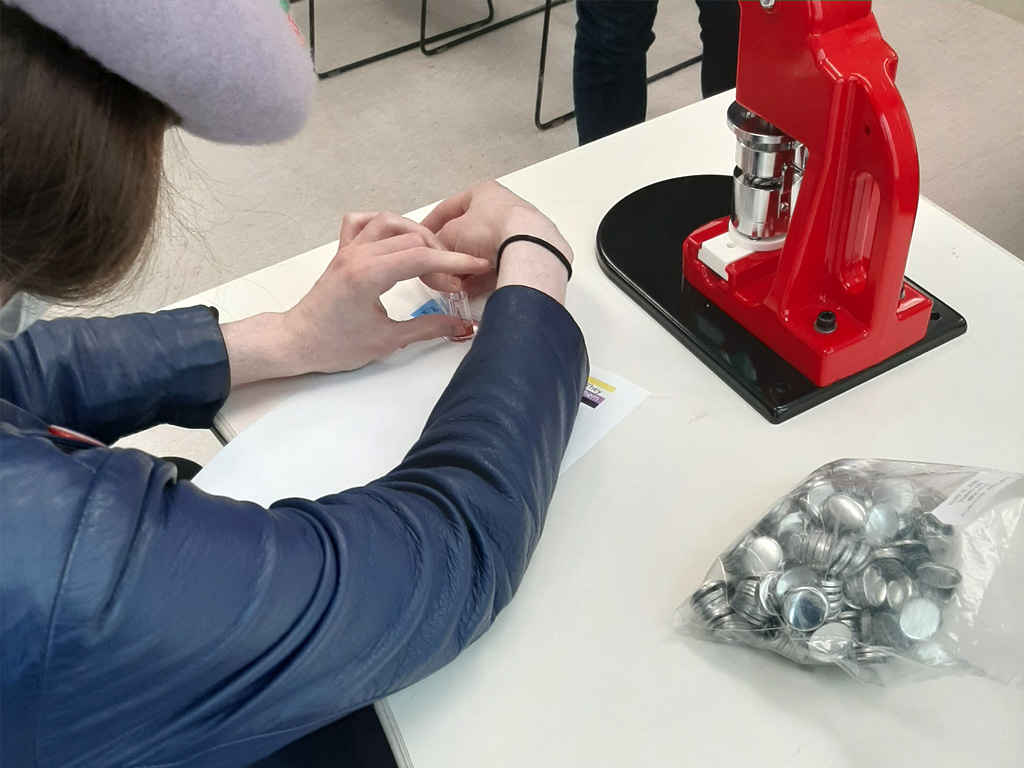
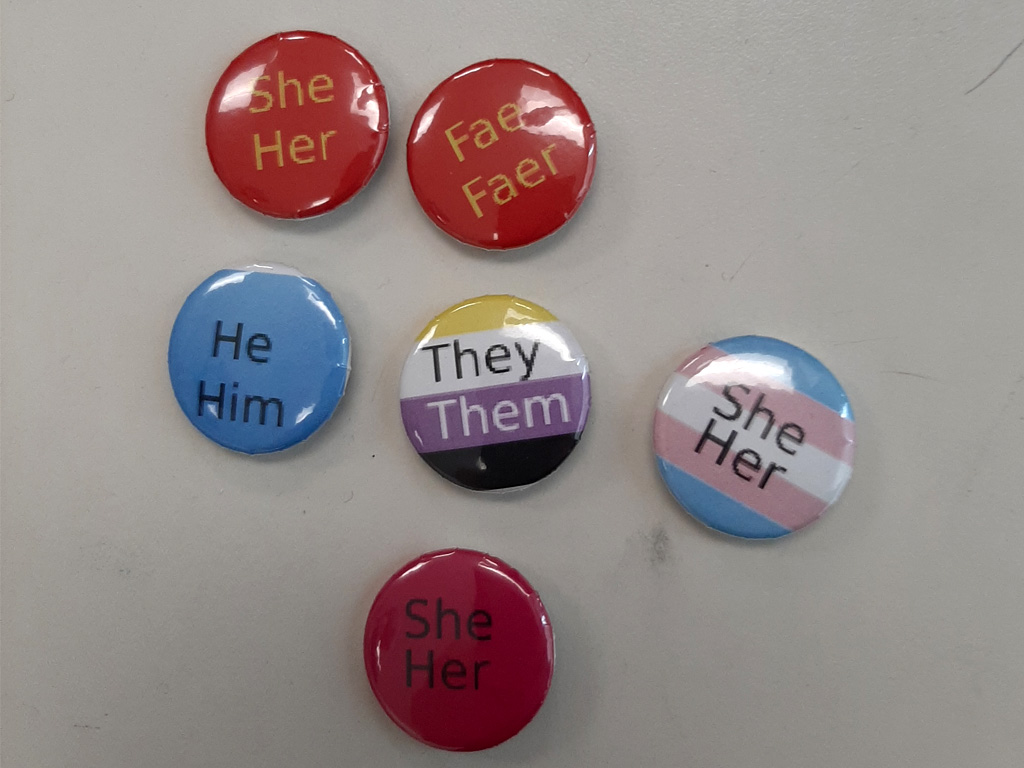
Pronoun buttons. What are they? They are small pins with a person’s pronouns on them. Why is this important? We can make harmful assumptions about individuals and by normalizing the concept of asking for, rather than assuming, a person’s pronouns we can make the world a more inclusive place. Most people choose to use a pronoun for themselves, though some people would actually prefer not to be referred to with a pronoun and instead have their name used in that place. The world is becoming a place where people are more willing to be their “true authentic self” and we here at the YMCA Academy welcome this inclusion and self expression.
The LGBTQ2SIA+ Alliance club has started an initiative to make pronoun buttons available to all who desire them. Pictured are just a few of the collection of buttons that were made, in house, on our very own button press. For those that don’t know about the LGBTQ2SIA+ Alliance it is a space where people from all walks of life come together to discuss things such as pop culture, current affairs, and other issues ranging from the topical to the seemingly trivial, usually through a lens of LGBTQ2SIA+ experiences and perspective. Allies are, of course, always welcome in this space.
For more information on why pronouns matter, and why pronoun buttons are important see the following link.
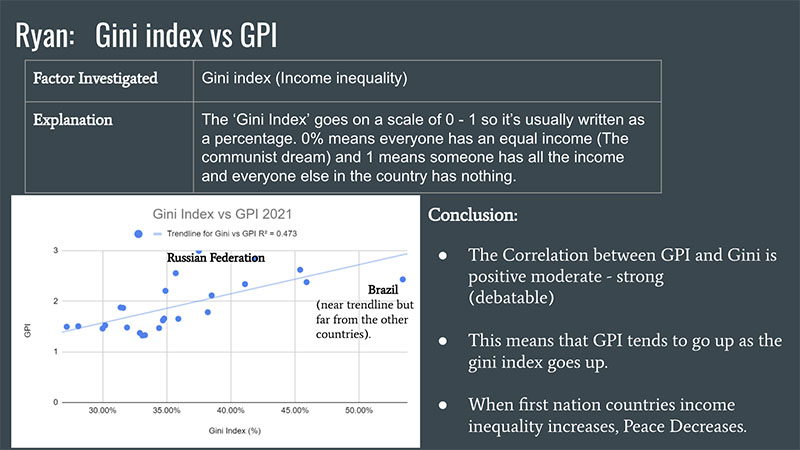
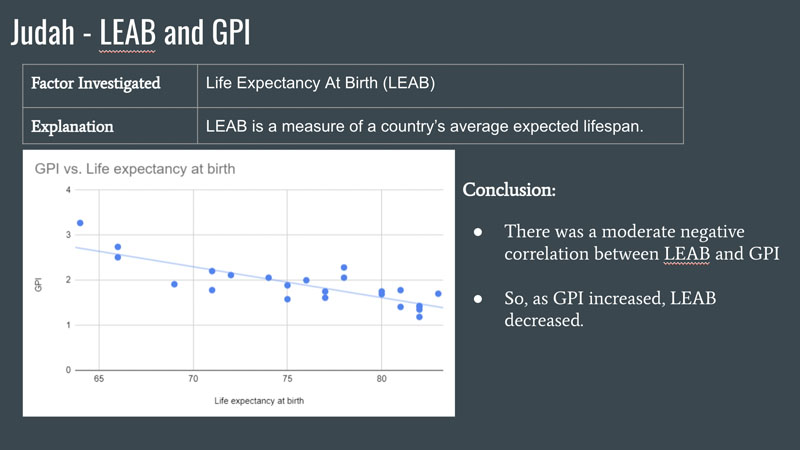
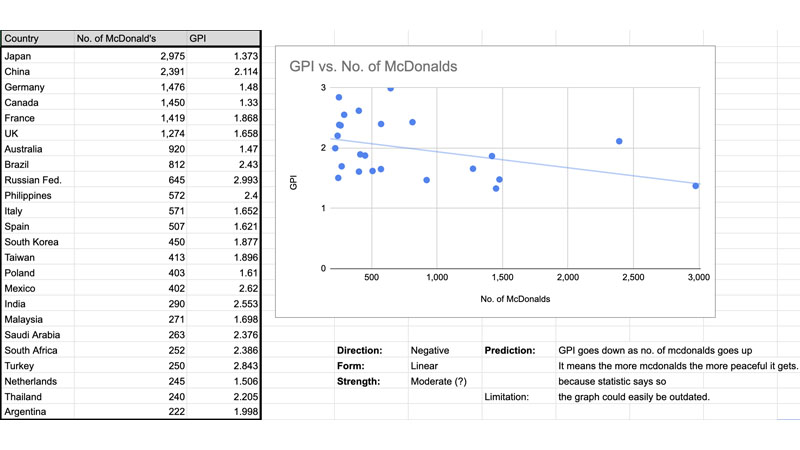
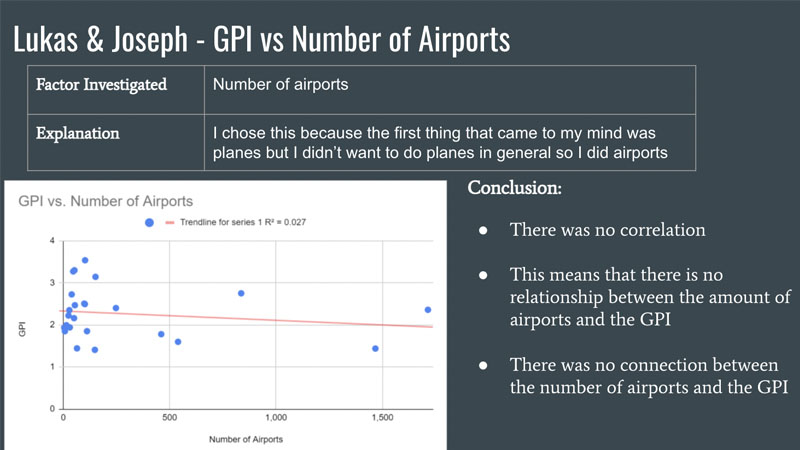
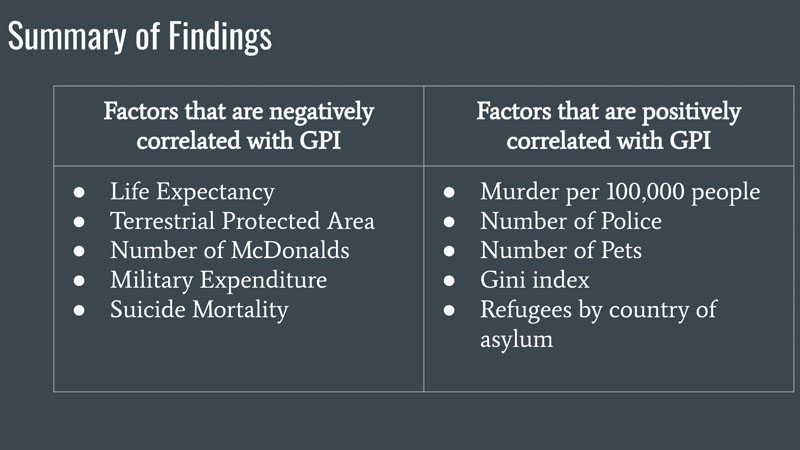
November was “Peace Month” at the Academy and every class worked on a peace-related project. Alex and Arnold’s Grade 9 math classes learned about one way of quantitatively measuring peace : the Global Peace Index (GPI) published by the Institute for Economics and Peace. Students reflected on the validity of such a measure. They then used their data management skills to investigate how different factors are correlated with GPI.
The Grade 9s collected data using the GPI Score Map, as well as using their research skills to find data sets related to factors of their interest. They then used scatter plots and lines of best fit in google sheets to analyze correlation between the factors of their choosing and GPI.
Our classes came up with some very insightful ideas about what might correlate with GPI. Is the amount of protected terrestrial area in a country correlated to its GPI score? What about a country’s carbon footprint? Or the number of McDonalds in a country? Check out our findings!
Here’s what some students had to say about the project:
“I compared my chosen factor to GPI to see if they had a correlation, put it into a scatter plot and explained and described the correlation between the two. I learned how to write math on a computer and how to write scatter plots too. Math is related to peace because we need to factor the amount of peace in a country.”
“I wrote down the data, I was moral support and a whole lot of other things. This project was really rough but at the end of the day I am taking it as a learning experience.”
“I enjoyed doing this with my partner and we did a great job asking each other and my partner helped me if I am having trouble when finding the big mac index with certain countries. I would definitely do a good job with my partner in the future.”
What is the Haunted House?
Our class created a haunted train that we called the Train to Corpses (TTC). When you went through all of the stations, you exited the train and were in a fashion show. Staff and students came through our haunted house and used a pretend Presto card as their ticket to come in. The train was a replica of a TTC subway car, except it had fake dead bodies! We set up the chairs in the room to look like the chairs in the subway car and even had marked accessible seating. We had posters and advertisements. We made our own subway map and displayed it above the doors. We made large subway doors. Zoe’s Media Arts class made soundscapes of ‘creepy subway’ sounds and we played that along with a video with the point of view of riding on the front of the subway. We had LED lights and Georgia flickered the lights when people came in. MJ, John and Dayna dressed up as TTC workers too!
The fashion show was in a long hallway. We set up a LED starlight and played upbeat fashion show music. We had homemade ghosts hanging from the ceiling, spider webs throughout and a bloody sign welcoming people to the fashion show. As people came through, Elliott met them and encouraged them to strut down the runway, passing Mark who was hiding in a box. Mark did a jump scare and slammed the door as people were leaving.
Process of making the haunted house
We spoke about what we wanted the theme of the haunted house to be. We discussed some of the roles and responsibilities to create it. We then each did a job and when we finished, we would help another person who needed support. Each of us had our own task:
Samuel: Painting, taped posters, Train to Corpses (TTC) sign and played a corpse during the haunted house
Elliott: Co-created and presented the fashion show section of the haunted house with Mark
Shea: During the haunted house I was in the subway train and did creepy jump scares
Georgia: I made the doors for the haunted house and worked with Matteo and helped to tape up everything on the day of the haunted house. I sort of helped out wherever I was needed. On the day of the haunted house I flickered the lights to create a creepy vibe.
Matteo: I painted the subway doors. During the haunted house I wore a mask and shook the chair to scare people.
Charlie P.: I painted the subway platform using egg cartons and yellow paint. My job for the haunted house was to tour groups through the subway car.
Nico: I created the ‘next station’ signs and helped other people with their jobs. I was the subway expert and shared specific details about the TTC so our subway looked real! During the haunted house I was a train conductor and yelled out the subway stops as groups were touring through.
Charlos: I created the posters, painted the subway doors, hung up the different sections of the fashion show and hung up the posters I created. During the haunted house I scared people as they were going through and covered Dayna in spider webs.
Mark: I helped to paint parts of the fashion show props. During the haunted house I did a jump scare and toured people through the fashion show section.
Julian: I helped MJ put up ghosts on the ceiling in the fashion show. I also made the Train to Corpses map with creepy stations. During the haunted house I ushered people to Charlie P.
Alex: I hung up accessible seating signs. I put spiders on the floor. During the haunted house I did my creepy double jointed arm thing as I was collecting students tickets.
Rhys: I painted one of the doors with Charlie C. and made a body sketch that we put on the ground of the haunted house. I helped MJ and Julian put up the ghosts. During the haunted house I acted on the TTC car and followed people out.
Favourite moment
I liked how we set it all up! It was a big haunted display with fake blood. I liked how we collaborated with each other and worked together to put on a haunted house for the whole school – Shea
I liked painting – Samuel
I liked making the haunted house and being able to talk to friends at the same time – Georgia
I liked to scare the teachers! I liked using Charlie P. to trace as a dead body – Rhys
This assignment was about reminding students their job is to become the person they want to be- citizens who can and should meaningfully contribute something important to the world.
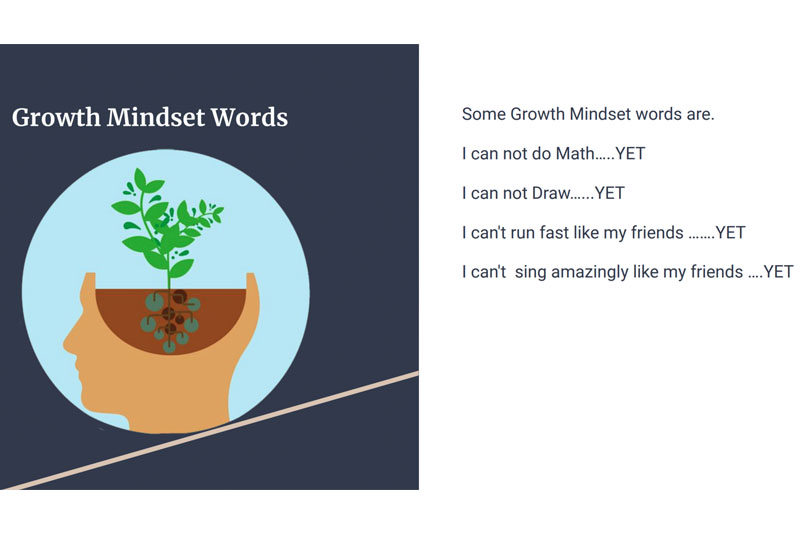
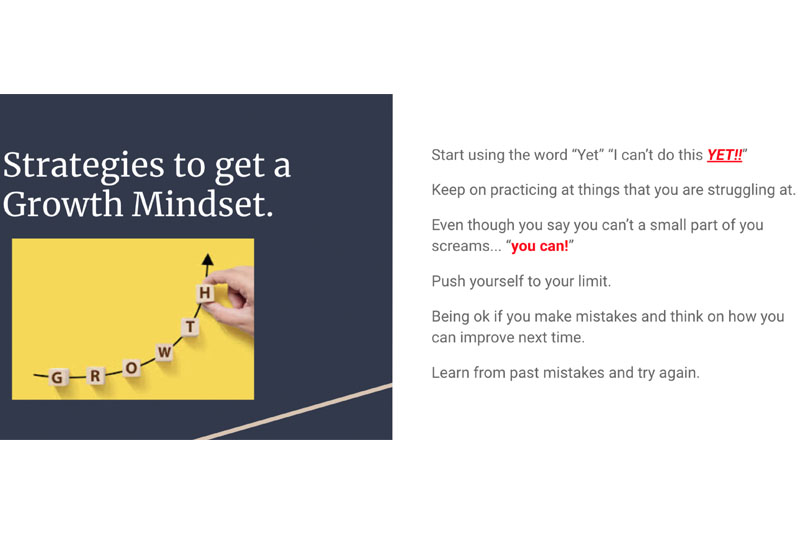
And…how can they start doing this? With the ‘Power of Yet!’
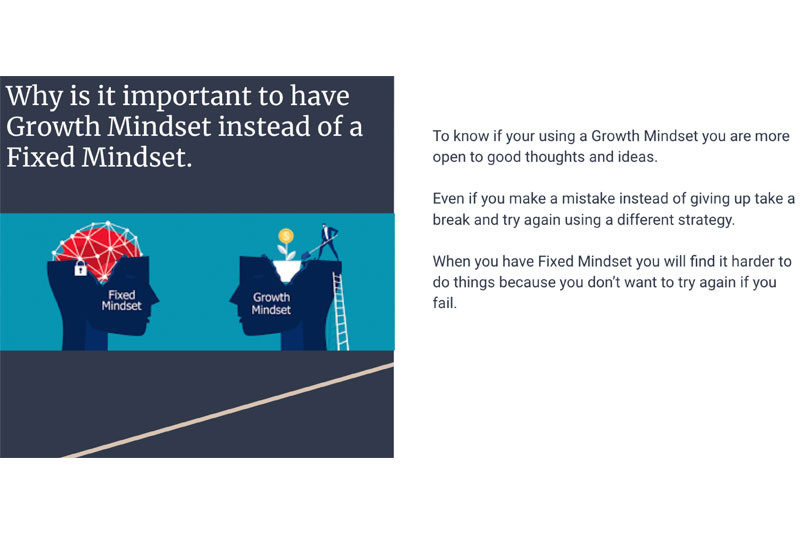
A simple way to start changing to a growth mindset is by the use of a little word, yet –
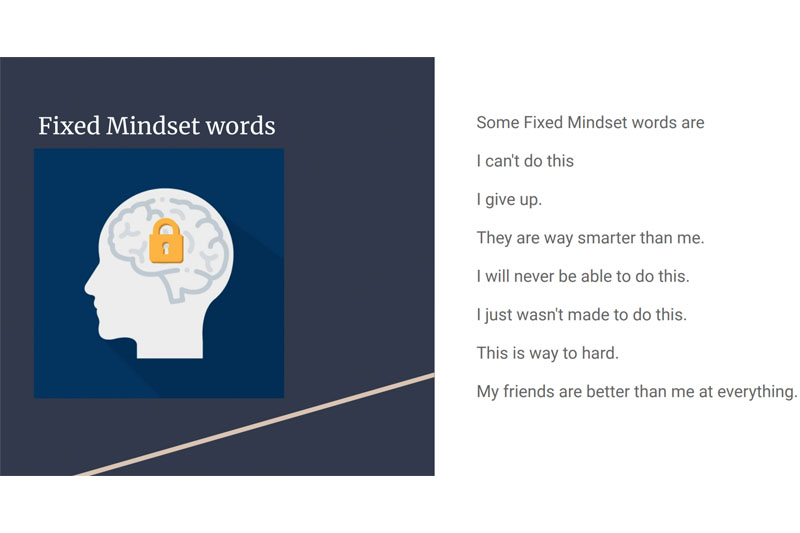
a realization that some things are worth waiting for and those things take work. No one can be expected to change their mindset overnight. We all have fixed mindsets about certain things without even realizing it. Changing your mindset is a process. It’s not always easy. It takes patience, coaching and lots of practice but the power of this small word allows for success.
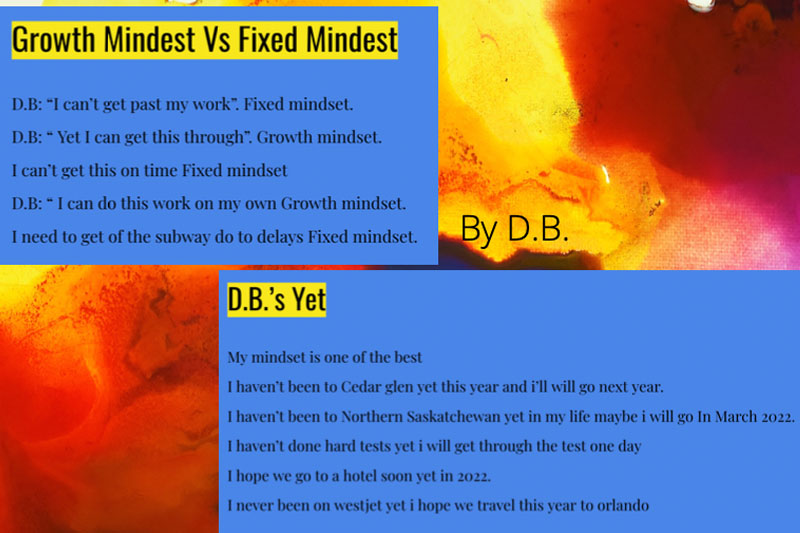
In our Learning Strategies class, we learned about the ‘Power of Yet’ and Growth & Fixed Mindsets. We talked about the things we were not able to do before and have since learned how to do, how to reframe mistakes as examples to the class and make sure to use the word yet in frustrating situations. Every student then chose a creative way to promote these concepts-through slideshows, videos, drawings, word art.
“I chose a happy face word art for my assignment because it is a positive image and I covered it with positive words. It fits in with the theme of the Growth Mindset. While I was thinking of words I wanted to give them a bit of flare. Also, there are different fonts because I wanted to shake it up and make the words more interesting.” – S.R.
“I picked these videos because I think they are great and they tell good things about getting things wrong and how we try to make them right. For example, sometimes we think we don’t know the whole song but once we try to sing it, we realize that we do know the song.” – J.G.
“I picked the ‘Power of Yet’ music video by CJ Luckey to include in my assignment because it was inspiring and very helpful. It is very positive with powerful words. Every person will now think positively about themselves and other people and kids will be happy.” – J.G.E.